
What Is the Rijksmuseum Famous For? (2026 Guide to Its Most Iconic Works)
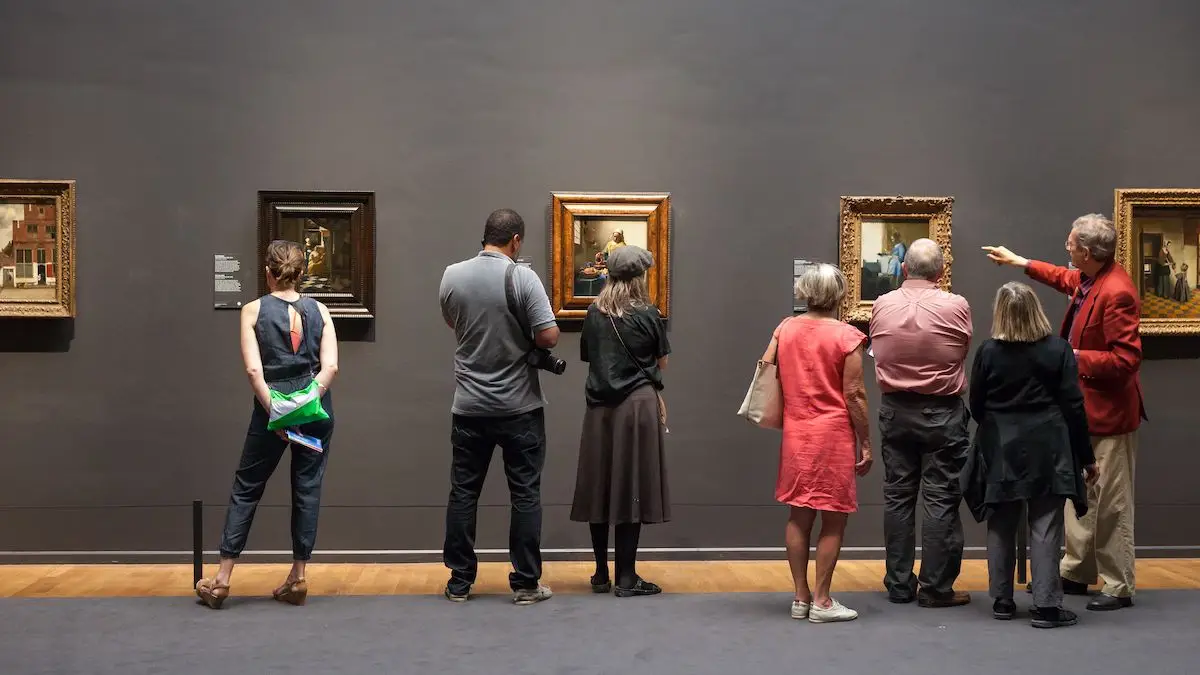
The Rijksmuseum is famous for being the Netherlands’ national museum of art and history and holding the world’s greatest collection of Dutch Golden Age painting. Its single most famous work is Rembrandt’s The Night Watch (1642), displayed in its own purpose-built hall at the end of the Gallery of Honour. It also holds four paintings by Johannes Vermeer — including The Milkmaid — making it one of the two most important Vermeer holdings in the world. Beyond the paintings, it’s known for Pierre Cuypers’ 1885 building, Petronella Oortman’s 17th-century dolls’ house, the Cuypers Library, and the Asian Pavilion.
The Rijksmuseum is the best-known museum in the Netherlands and one of the most-visited in Europe — over 2.7 million people walk through it every year. Ask a hundred visitors what it’s famous for, and you’ll get a handful of consistent answers: Rembrandt, Vermeer, The Night Watch, the building itself, the dolls’ house, the Dutch Golden Age. This guide walks through all of them, plus a few reasons for its fame that most visitors don’t immediately think of.
1. The Night Watch by Rembrandt
The Rijksmuseum’s single most famous work is Rembrandt van Rijn’s The Night Watch (1642) — a monumental group portrait of an Amsterdam militia company, over 3 metres tall and nearly 4 metres wide. It hangs at the end of the Gallery of Honour in a purpose-built hall and is widely considered the most important Dutch painting ever made. Since 2019, it has been undergoing the largest restoration in its history, with conservators often visible working on it behind glass.
The Night Watch is Rembrandt’s largest painting and the work that cemented his reputation in 1640s Amsterdam. Technically titled Militia Company of District II under the Command of Captain Frans Banninck Cocq, it was commissioned by the militia to hang in their assembly hall. What made it revolutionary — and still makes it unlike any other group portrait — is the dynamic composition: the subjects are not posed statically side by side but caught mid-motion, stepping forward out of the painting itself.
The painting has been trimmed (the original was larger), survived a 1975 knife attack, and is currently the subject of Operation Night Watch — the largest research and restoration project in its history. Visitors can often see conservators working on it in real time behind a glass chamber. For a full guide, see our dedicated piece on The Night Watch by Rembrandt.
2. Four Paintings by Johannes Vermeer
The Rijksmuseum holds four of the roughly 34 known Vermeer paintings, making it one of the two most important Vermeer collections in the world (alongside the Mauritshuis in The Hague). The four are The Milkmaid (c. 1658), The Little Street (c. 1658), Woman Reading a Letter (c. 1663), and Woman with a Water Pitcher (c. 1664 — on long-term loan from the Metropolitan Museum of Art). All hang in the Gallery of Honour.
Vermeer painted only about 34 canvases that have survived. Four of them hang in the Rijksmuseum’s Gallery of Honour, within a few metres of each other — a density of Vermeer that exists nowhere else outside a major special exhibition.
The Milkmaid is the most famous of the four, and probably the second most-viewed painting in the museum after The Night Watch. Its quiet, uncluttered composition — a woman pouring milk into a bowl in a plain interior — has become one of the defining images of Dutch Golden Age painting. See The Milkmaid by Vermeer: What to Know Before You See It.
3. The World’s Greatest Dutch Golden Age Collection
The 17th century was the Dutch Republic’s economic and cultural peak — a period known as the Dutch Golden Age. Amsterdam was the wealthiest city in Europe, the Dutch East India Company dominated global trade, and a middle class with disposable income supported an explosion of painting unlike anything else in European history.
The Rijksmuseum holds the most important concentration of Dutch Golden Age painting anywhere. Beyond Rembrandt and Vermeer, this includes:
- Frans Hals — portrait painting at its most immediate, including The Merry Drinker
- Jan Steen — domestic scenes, riotous tavern paintings, moralizing genre pieces
- Hendrick Avercamp — winter landscapes that defined an entire sub-genre
- Jacob van Ruisdael — landscapes that influenced every European landscape painter after him
- Pieter de Hooch — domestic interiors, often paired with Vermeer in exhibitions
See Dutch Golden Age Painting: A Beginner's Guide for a full introduction.
4. Pierre Cuypers’ 1885 Building
The Rijksmuseum is famous not just for the art it contains but for the building it’s in. Designed by Pierre Cuypers and opened in 1885, it’s considered one of the greatest Dutch architectural achievements of the 19th century — a hybrid of neo-Gothic and neo-Renaissance styles, elaborately decorated with reliefs, sculptures, mosaics, and stained glass telling the story of Dutch history.
Cuypers also designed Amsterdam Centraal Station, and the two buildings share a visual family resemblance. The Rijksmuseum’s 2013 renovation — a decade-long, €375 million project — restored much of Cuypers’ original vision after decades of interior changes. The restored building is now considered one of the best museum renovations of the 21st century. See The Rijksmuseum Building: Cuypers' Masterpiece.
5. Petronella Oortman’s Dolls’ House
One of the museum’s most loved objects — and often the first thing children head to — is Petronella Oortman’s dolls’ house, a cathedral-scale model of a 17th-century Amsterdam canal house. It’s not a toy; it was a showpiece commissioned by a wealthy Amsterdam family, and it cost roughly as much as a real canal house of the period. Every tiny room is furnished with scale-perfect miniatures made by the same craftsmen who produced real-world Dutch household objects.
It inspired Jessie Burton’s 2014 novel The Miniaturist and its subsequent BBC adaptation, which introduced a new generation of visitors to the object. See Petronella Oortman's Dolls' House.
6. The Cuypers Library
The working research library of the museum, and one of the most photographed spots in the building. Multiple storeys of book-lined galleries connected by spiral staircases, all designed by Cuypers. It looks like something from a Wes Anderson film or a fantasy novel, and visitors can view it from a gallery platform (though the library itself is open only to researchers). See The Cuypers Library: The Rijksmuseum's Hidden Gem.
7. The Asian Pavilion
Often missed by visitors rushing to the Gallery of Honour, the Asian Pavilion is one of Europe’s most important collections of Asian art. It was opened in 2013 as part of the renovation and includes Chinese bronzes, Japanese screens, Indonesian temple sculpture, and South Asian Buddhist and Hindu pieces. The pavilion is architecturally distinct — a separate building connected to the main Rijksmuseum by a glass bridge. See The Asian Pavilion at the Rijksmuseum.
8. Being the Netherlands’ National Museum
The Rijksmuseum is not a private institution or a city museum — it’s the Netherlands’ national museum of art and history. That distinction shapes everything about what’s inside. The collection tells the story of Dutch national identity: colonial expansion and its troubled legacy, the East India Company, the Napoleonic period, the 20th century. You’re not just visiting a museum in Amsterdam; you’re visiting the official cultural archive of the Dutch state.
This also means the museum operates under a different mandate from commercial museums. The Rijksmuseum’s online collection (Rijksstudio) makes over 750,000 digitized objects freely available and downloadable in high resolution for any use — one of the most generous open-access policies of any major museum in the world.
9. Rembrandt’s Other Major Works
The museum’s fame rests heavily on The Night Watch, but Rembrandt is represented by more than just that single painting. Other Rembrandts on permanent display include The Jewish Bride (c. 1665 — one of his most tender late works), The Syndics (1662), Self-Portrait as the Apostle Paul (1661), and The Anatomy Lesson of Dr Deijman (1656). For every Rembrandt you can see at the museum, see Rembrandt at the Rijksmuseum: Every Painting & Where to Find It.
10. Four Van Goghs — Including a Self-Portrait
A fact that surprises many visitors: the Rijksmuseum owns four Vincent van Gogh paintings, including one of his celebrated self-portraits. These are nothing like the quantity at the nearby Van Gogh Museum (which holds 200+), but they’re a reminder that the Rijksmuseum’s scope extends past the Golden Age. See our comparison of the two museums for how they differ.
Less Obvious Reasons It’s Famous
Beyond the headline works, the Rijksmuseum is known for several other things among people who spend time there:
- Being entirely cashless — one of the first major museums in Europe to go fully card-only
- Operation Night Watch — the high-profile, ongoing public restoration of Rembrandt’s masterpiece, which has attracted international press coverage and academic attention since 2019
- Its family programming — the Family Quest and Family Route are considered best-in-class among European major museums. See Visiting the Rijksmuseum with Kids.
- Its free outdoor sculpture gardens — open in summer, one of the best free outdoor spaces in central Amsterdam
- Its location on Museumplein — shared with the Van Gogh Museum, Stedelijk, and Concertgebouw, making it the centre of Amsterdam’s cultural quarter
A Brief History: Why the Rijksmuseum Exists
The Rijksmuseum’s story begins in 1798, when the new Dutch Republic decided it needed a national museum. It opened in 1800 in The Hague — not Amsterdam — with roughly 200 paintings and historical artefacts. In 1808, King Louis Napoleon (Napoleon’s younger brother, installed as King of Holland) moved the collection to Amsterdam’s Royal Palace on Dam Square.
By the 1860s, it was clear the growing collection needed its own dedicated building. An architectural competition was held in 1863, and Pierre Cuypers’ design eventually won. Construction began in 1876, and the building opened in 1885. It has expanded and been renovated several times since, with the most recent major renovation completing in 2013.
How It Compares to Other Famous European Museums
The Rijksmuseum is often compared to:
- The Louvre, Paris — bigger and broader, but without the Rijksmuseum’s national-specific depth
- The Prado, Madrid — a similar national-museum model, focused on Spanish Golden Age rather than Dutch
- The Hermitage, Saint Petersburg — broader scope, imperial rather than national framing
- The Mauritshuis, The Hague — smaller Dutch peer, with an overlapping Golden Age focus and the only collection of Vermeers that rivals the Rijksmuseum
Among European national museums, the Rijksmuseum sits in the top tier for both collection quality and visitor experience. For a fuller analysis of whether it’s worth your time, see Is the Rijksmuseum Worth Visiting?.
Frequently Asked Questions
What is the Rijksmuseum most famous for?
Rembrandt’s The Night Watch (1642), which is widely considered the most important Dutch painting in existence. It hangs at the end of the Gallery of Honour in a purpose-built hall.
Is the Rijksmuseum the same as the Van Gogh Museum?
No. They’re different museums, 3 to 5 minutes apart on Museumplein. The Rijksmuseum is a broad survey of Dutch art and history across 800 years. The Van Gogh Museum is dedicated entirely to Vincent van Gogh.
Does the Rijksmuseum have Van Gogh paintings?
Yes — four, including a self-portrait. But the Van Gogh Museum across Museumplein holds the world’s largest single-artist collection (200+ paintings).
What is the Dutch Golden Age?
The 17th century — the Dutch Republic’s economic and cultural peak. It was a period of global trade, scientific progress, and an unprecedented flowering of painting. The Rijksmuseum holds the most important collection of Dutch Golden Age art anywhere.
Who designed the Rijksmuseum building?
Pierre Cuypers, a Dutch architect who also designed Amsterdam Centraal Station. The building opened in 1885. Its neo-Gothic and neo-Renaissance style was controversial at the time for being too religious-looking for a state museum.
What are the must-see works at the Rijksmuseum?
Rembrandt’s The Night Watch, Vermeer’s The Milkmaid, Petronella Oortman’s dolls’ house, the Cuypers Library, and at least one Frans Hals or Jan Steen. See our full Rijksmuseum in 2 Hours: A Self-Guided Route.
How many paintings are in the Rijksmuseum?
About 8,000 objects are on display at any time. The total collection — including items in storage — is over one million.
Is the Rijksmuseum the most visited museum in the Netherlands?
Yes. The Rijksmuseum welcomes around 2.7 million visitors per year, making it the most-visited museum in the country.
