
Rijksmuseum Gardens (2026): The Free Sculpture Garden Visitor's Guide
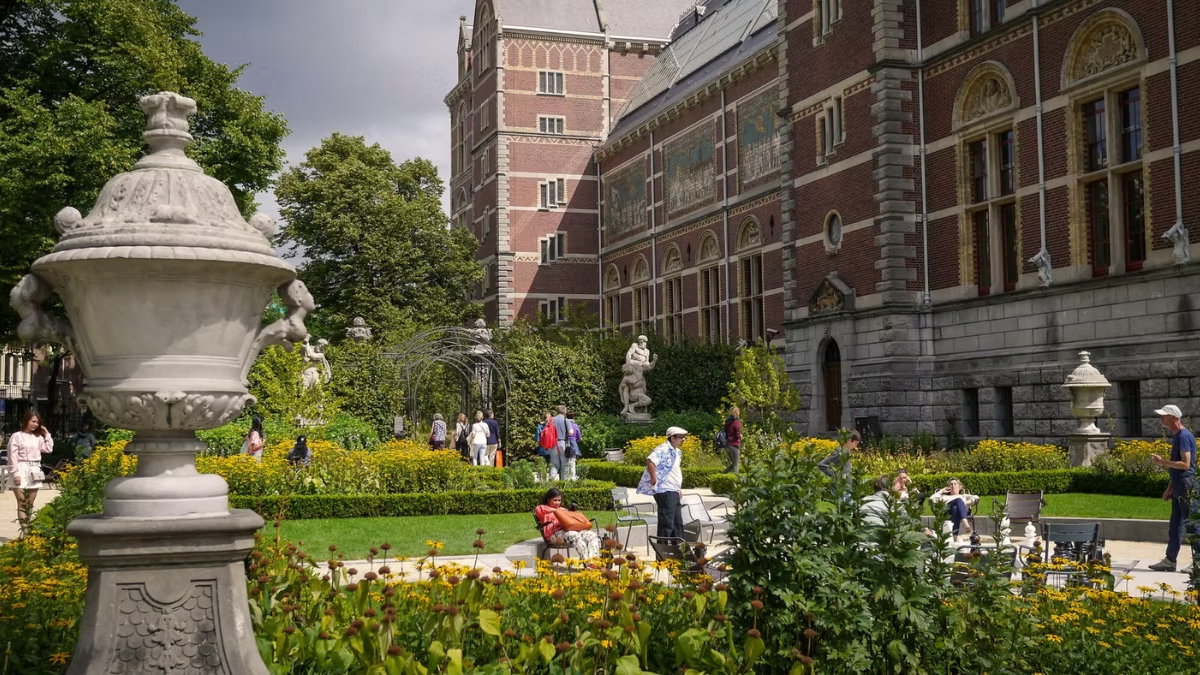
The Rijksmuseum Gardens are a free, 14,500 square-metre public garden surrounding the Rijksmuseum building — open daily from 09:00 to 18:00 year-round, with no ticket or booking required. The gardens include sculpture from the Rijksmuseum’s collection, fragments of historic Dutch architecture (Renaissance gateways, stone ornaments, a 17th-century garden pavilion), a recreated 17th-century Dutch garden, a children’s playground, and a summer outdoor café. Annual seasonal programming includes spring tulip plantings, summer exhibition installations, and a winter ice rink (occasional years). One of the best-value free things to do in Amsterdam — you don’t need a museum ticket to enter. Accessed from Museumstraat on either side of the museum building.
Most visitors to the Rijksmuseum focus on what’s inside and leave without realising there’s a genuinely beautiful free garden surrounding the building. The Rijksmuseum Gardens aren’t just green space — they’re a curated extension of the museum collection into the open air, with historical architecture, sculpture, and seasonal programming. This guide covers what to see, when to visit, and why the gardens are worth a deliberate 30-minute detour even if you’re here for the paintings.
What Are the Rijksmuseum Gardens?
The Rijksmuseum Gardens are landscaped public grounds covering about 14,500 square metres on both sides of the main Rijksmuseum building. They were designed by Pierre Cuypers alongside the museum in the 1880s and significantly renovated in 2013 as part of the main museum refurbishment. The gardens now serve as an outdoor extension of the museum collection — with historical stone fragments, sculptures, recreated period gardens, and seasonal art installations. Entry is always free; no ticket, no booking, open to anyone. Working hours are typically 09:00 to 18:00 year-round (sometimes restricted in winter).
Key facts at a glance
| Fact | Detail |
|---|---|
| Size | ~14,500 square metres |
| Designer | Pierre Cuypers (original 1880s); major 2013 renovation |
| Location | Around the Rijksmuseum, Museumstraat, Amsterdam |
| Hours | 09:00 – 18:00 daily (year-round; seasonal variation) |
| Entry fee | Free |
| Museum ticket required? | No |
| Dogs allowed? | Yes, on lead |
| Wheelchair accessible | Mostly yes |
Where to Find the Gardens
The gardens wrap around both the east and west sides of the Rijksmuseum building. The main entrance gates open directly onto Museumstraat — the street that cuts through the building via the Onderdoorgang (central passage). You can enter the gardens without entering the museum: simply walk through the museum passage from Museumplein, turn left or right after emerging on the opposite side, and you’ll see the garden gates. You do not need to pass through museum security or show a ticket.
Navigation
If you’re coming from Museumplein (north side): 1. Walk toward the Rijksmuseum’s main facade 2. Enter the Onderdoorgang (the arched public passage through the building) 3. On the far side (south), turn left or right onto Museumstraat 4. Look for the garden entrance gates on your left (east garden) or right (west garden)
If you’re coming from the canal side (south): 1. Walk along Stadhouderskade or come via tram to the Rijksmuseum stop 2. The garden entrances are immediately adjacent to the south facade of the museum
If you’re entering via the museum itself: – A garden exit can be accessed from the west wing of the museum during opening hours, letting you transition from the inside to the outside without re-entering through the main gate
See Rijksmuseum Floor Plan & Map.
What’s in the Gardens
The sculpture collection
The gardens display sculptures from the Rijksmuseum’s permanent collection — mostly large-scale stone and bronze works that wouldn’t fit or suit indoor display. Rotating pieces on view include:
- Architectural fragments from demolished Dutch historic buildings
- Renaissance and Baroque stone ornaments rescued from 16th-17th century Dutch buildings
- Statuary from former public squares
- Modern and contemporary sculpture rotated seasonally
Historical architectural fragments
Beyond free-standing sculpture, the gardens contain assembled historical building fragments:
- Renaissance gateway stones (portals, capitals, ornamental reliefs)
- A 17th-century garden pavilion relocated to the grounds
- A Dutch Renaissance balustrade from a demolished canal house
- Stone inscriptions from historic Amsterdam buildings
These pieces are genuinely rare surviving examples of Dutch architectural ornament from the 16th-18th centuries, many rescued during urban demolition in the 19th and 20th centuries.
The recreated 17th-century Dutch garden
A dedicated section of the gardens is planted as a recreated Dutch Golden Age garden — using plant species and layout patterns documented in 17th-century Dutch garden manuals and paintings. You can see:
- Period-accurate plantings — flowers, herbs, small fruit trees of the era
- Geometric parterre design — the formal, symmetrical style fashionable in the 17th century
- Box hedging — characteristic Dutch garden structure
This is a small but genuinely informative part of the gardens for visitors interested in Dutch material culture.
The seasonal programming
The Rijksmuseum rotates seasonal installations and plantings:
Spring (March-May): – Tulip plantings — tens of thousands of bulbs create a dramatic spring display – Early spring installations — outdoor sculpture exhibitions often begin here
Summer (June-August): – Peak garden season — all plantings at full display – Outdoor café open — seating on the west side of the gardens – Summer art installations — contemporary sculpture exhibitions outdoor – Longer effective hours — sunset after 21:00 means late-evening visits are pleasant
Autumn (September-November): – Autumn plantings with seasonal colour – Chrysanthemums and late-season perennials – Slightly earlier closing times as daylight shortens
Winter (December-February): – Reduced active plantings, but the architectural fragments and sculpture remain fully visible – Occasional ice rink (in some years — not every winter) – Seasonal lights and decorative installations around the Christmas period – Shorter effective visiting window — closing times can shift to 17:00 or 16:00 on the shortest winter days
The children’s playground
A small wooden climbing and play structure is installed in the gardens for children. Simple but well-placed — it gives families a break point during museum visits. Free to use.
The café
During warmer months (typically April-October), an outdoor café operates on the west side of the gardens. Serves coffee, tea, snacks, and light meals. Seating is outdoor, under umbrellas or open-air. Busiest on weekend afternoons.
Why the Gardens Matter
Beyond being pleasant green space, the gardens serve several functions:
Free extension of the collection
The entire garden is effectively a free Rijksmuseum satellite. You can enjoy Dutch sculpture, architectural history, and curated landscape without buying a ticket. This is one of the most underrated free things in Amsterdam.
See Free Things to Do at the Rijksmuseum for more free offerings.
A decompression space after the museum
After 2-3 hours inside a busy museum, the gardens provide an excellent transition space back to the rest of Amsterdam. Many visitors end their museum visit with a 20-30 minute garden walk.
A quiet photography location
The gardens are far less crowded than the museum’s interior spaces. For photography enthusiasts, this means much cleaner architectural and sculpture shots than are possible inside.
A museum-quality green space
Amsterdam has larger parks (Vondelpark, Oosterpark), but the Rijksmuseum Gardens are exceptionally well-designed and maintained — a boutique green space with strong curatorial direction, not just a public park.
When to Visit the Gardens
Best times
Spring (April-May): – Tulip bloom is spectacular – Mild weather, long days – The single best time if you can schedule for it
Summer (June-August): – All plantings at peak – Outdoor café open – Long evenings for late visits – Occasionally hot but rarely uncomfortably so in Amsterdam
Early autumn (September): – Still-warm temperatures – Autumn colour begins – Less crowded than peak summer
Less ideal
Deep winter (December-February): – Plantings dormant – Sometimes shorter opening hours – Still walkable, but the experience is reduced – Sculpture and architecture still visible
Heavy rain or strong wind: – No cover in the gardens; bad weather makes the visit unpleasant – Check the forecast before planning a garden-focused trip
How Long to Spend
- Quick walkthrough: 15-20 minutes — enough to see the main sculpture and one section of plantings
- Typical visit: 30-45 minutes — comprehensive walk covering both east and west gardens
- Extended visit: 60-90 minutes — including time at the café and a pause on a bench with a book
Most museum visitors combine the gardens with their museum visit for an additional 20-30 minutes either before or after going inside.
The Best Garden Itinerary
Combining the gardens with a museum visit:
Museum-first itinerary
- 9:00 AM — Rijksmuseum entry slot
- 9:00 AM – 12:00 PM — Museum interior (Gallery of Honour, Night Watch, etc.)
- 12:00 PM – 1:00 PM — Garden walk + outdoor café lunch
- 1:00 PM onward — Continue exploring Amsterdam
Garden-first itinerary (if you have an afternoon museum slot)
- Morning — Walk through the gardens, coffee at outdoor café
- Midday lunch — Nearby on Museumplein or Vondelpark
- Afternoon museum slot (e.g. 2:00 PM) — Museum interior
Garden-only visit
If you want to visit without going inside the museum:
- Arrive any time during opening hours (typically 9am-6pm)
- No booking or tickets needed
- Spend 30-45 minutes walking through both sides of the gardens
- Combine with nearby sights — Vondelpark (5 min walk), Museumplein (directly adjacent), Van Gogh Museum (3 min walk but requires advance booking)
Photography in the Gardens
Photography in the gardens is unrestricted — no flash limits, tripods allowed, selfie sticks allowed, no limits on duration or approach. This is a genuine contrast to the museum interior, where strict photography rules apply.
Best photography opportunities: – The south facade of the Rijksmuseum viewed from the south gardens — spectacular architectural photography, especially in late afternoon light – The historical architectural fragments — close-up shots of Renaissance stonework – The tulip display (April-May) — one of Amsterdam’s photogenic spring sights – The Cuypers towers framed by trees — multiple good vantage points
Compare with Photography Rules at the Rijksmuseum for the indoor rules.
Accessibility
The gardens are largely wheelchair accessible — main paths are paved or stabilised gravel. A few smaller paths (especially in the recreated 17th-century garden section) may have grass or loose stone, but all major features can be reached via accessible routes.
Benches are placed throughout for rest breaks. Water fountains are available seasonally.
See Rijksmuseum Accessibility for the museum’s broader accessibility provisions.
Frequently Asked Questions
Are the Rijksmuseum Gardens free?
Yes. Entry is completely free, no ticket or booking required. The gardens are open to the public separately from the museum.
What are the Rijksmuseum Gardens opening hours?
Typically 09:00 to 18:00 daily, year-round. Hours may be restricted in winter (sometimes 09:00-17:00 or 09:00-16:00 in deepest winter) and extended in summer. Check the Rijksmuseum’s website for current seasonal hours.
Do I need a museum ticket to enter the gardens?
No. The gardens are entirely separate from the museum’s ticketed interior. You can enter the gardens without going inside the museum, and vice versa.
Where are the Rijksmuseum Gardens?
They surround the Rijksmuseum building on both the east and west sides. Main entrance gates open onto Museumstraat. You can walk in from Museumplein via the Onderdoorgang (the central public passage through the museum building).
What’s in the Rijksmuseum Gardens?
Sculpture, historical architectural fragments, a recreated 17th-century Dutch garden, seasonal flower plantings, a small children’s playground, and an outdoor café (summer only). Combined they create an outdoor extension of the museum collection.
When are the tulips in bloom at the Rijksmuseum Gardens?
April to May, typically peaking in mid-to-late April. The gardens plant tens of thousands of bulbs, creating one of Amsterdam’s spring sights.
Can I bring a picnic to the gardens?
Generally yes — informal picnicking on the lawn is accepted. The museum prefers visitors use the outdoor café (when open) for food and drink, but quiet personal picnics are tolerated.
Is the outdoor café at the Rijksmuseum open year-round?
No. The outdoor café operates seasonally, typically April through October. Exact dates depend on weather and demand — the café closes for winter.
Are dogs allowed in the Rijksmuseum Gardens?
Yes, on a lead. Service animals of course have full access. Owners are expected to clean up after their pets.
Can I photograph the gardens freely?
Yes. Unlike the museum interior, the gardens have no photography restrictions — flash, tripods, and selfie sticks are all permitted.
Are the gardens suitable for children?
Yes. The small playground makes the gardens genuinely child-friendly, and children usually enjoy running around the sculpture areas. A good space for a break during or after a museum visit. See Visiting the Rijksmuseum with Kids.
Can I have a wedding photo shoot in the gardens?
Commercial photography (weddings, fashion shoots, filmed content) typically requires advance permission from the Rijksmuseum. Contact the museum’s press office or events team for commercial requests. Personal informal wedding photos are generally accepted.
Are there toilets in the gardens?
Public toilets are in the museum interior (requires a ticket or the café area). During the warmer months the outdoor café usually has toilet access. There are also nearby public toilets at Museumplein and in Vondelpark.
