
Rijksmuseum Photography Rules (2026): What's Allowed & What Isn't
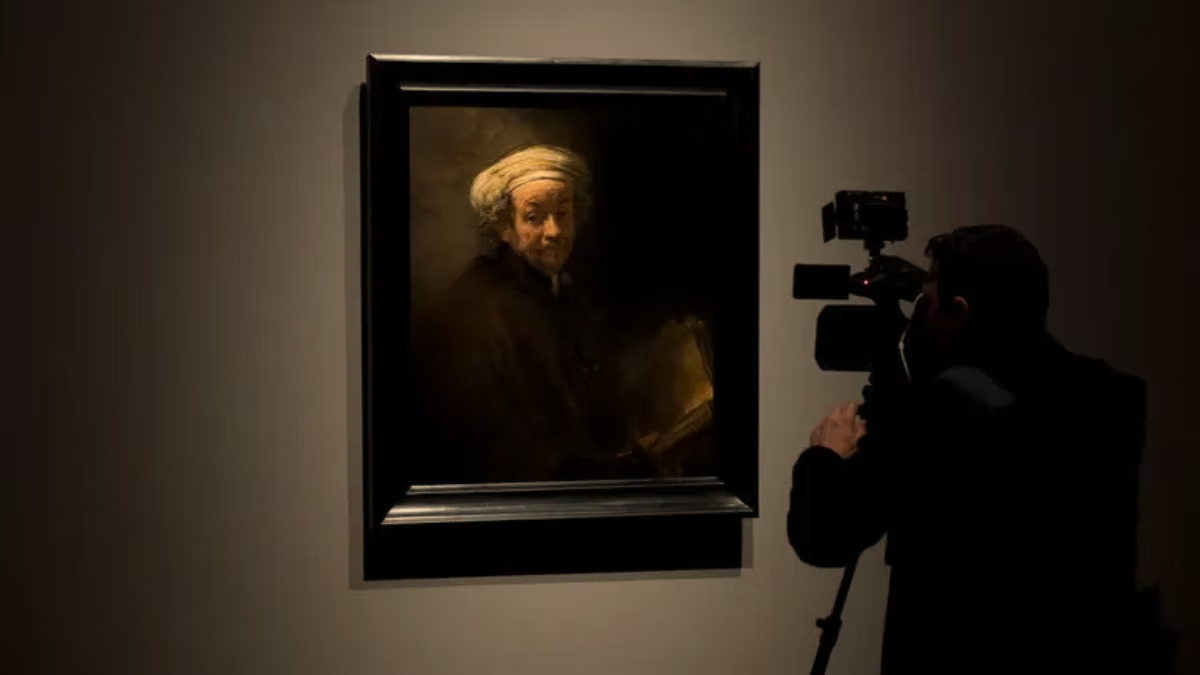
Photography and filming are allowed throughout the Rijksmuseum for personal use, provided it doesn’t disturb other visitors. You must have a valid museum ticket. The key rules: hand-held cameras and mobile phones only — no flash, no tripods, no monopods, no selfie sticks, no additional lighting, no drones. Commercial or professional photography requires advance written permission and may incur fees. The Rijksmuseum gardens are free to access and freely photographable during opening hours without a ticket. Temporary exhibitions occasionally have stricter rules — check on-site signage.
Photography at the Rijksmuseum is genuinely liberal by major-museum standards. Unlike the Musée d’Orsay, the Alte Pinakothek, or the Sistine Chapel, the Rijksmuseum permits visitors to photograph nearly every work in its permanent collection — including The Night Watch, The Milkmaid, and the other masterpieces in the Gallery of Honour. The rules exist to protect the art and keep the galleries navigable, not to prevent visitors from taking pictures. This guide covers exactly what’s allowed, what isn’t, and a few practical tips for getting better photos in difficult museum lighting.
Is Photography Allowed Inside the Rijksmuseum?
Yes — the Rijksmuseum permits photography and filming throughout the museum for personal, non-commercial use, provided you have a valid ticket and your activity doesn’t disturb other visitors. This applies to the permanent collection including the Gallery of Honour, the Night Watch Room, the Cuypers Library viewing gallery, the Asian Pavilion, and all public spaces. Temporary and loaned exhibitions occasionally have stricter rules — watch for signage.
The museum’s stated photography policy is published at rijksmuseum.nl/en/press/filming-and-photographing. In plain terms: handheld, personal, no flash, no stabilisers — go ahead.
This is the same approach used at the Louvre, the Metropolitan Museum of Art, the British Museum, and most major Western museums. It represents a significant shift from the 1990s and early 2000s, when most museums banned photography entirely.
What’s Not Allowed
The museum’s restrictions fall into three groups — equipment, settings, and behaviour.
Equipment not permitted
- Tripods — including travel tripods and tabletop tripods
- Monopods — same rationale as tripods
- Selfie sticks — both a safety and crowd-management issue
- Additional lighting — reflectors, LED panels, or any portable lighting
- Drones — not allowed anywhere inside or in the gardens
- Props — items brought specifically for staged photos (costumes, signs, commercial packaging)
Settings and techniques
- Flash photography — prohibited throughout the museum. Long-term flash exposure causes cumulative fading and pigment damage to paintings and textiles. Most modern phones auto-detect low light; double-check that flash is disabled before entering the galleries.
Behaviour
- Blocking other visitors — staff will ask you to move on if you set up a shot that obstructs flow in narrow galleries, particularly around The Night Watch and in the Gallery of Honour
- Touching artworks to get a photo — strictly prohibited; some works like The Jewish Bride and The Milkmaid are displayed without glass and staff watch closely
What About Phones vs Cameras?
Both are permitted, with identical rules. Some visitors report being told to put away a DSLR while phones around them kept taking photos — this is not official museum policy. A valid ticket-holder using a handheld DSLR without flash or stabilisers is within the rules. If a staff member raises an issue about a specific camera, politely ask whether they’re referring to a temporary exhibition restriction rather than the permanent collection.
In crowded spaces like the Night Watch Room, a phone is genuinely easier — it’s less conspicuous, smaller in tight crowds, and less likely to accidentally touch anything.
The Gardens — No Ticket Required
The Rijksmuseum Gardens on the Museumplein side of the building are free to access during museum opening hours (9 AM to 6 PM in summer, limited opening in winter) and are freely photographable without any ticket. This includes:
- The outdoor sculpture collection
- The formal garden beds, fountains, and pathways
- The museum’s exterior facade from the garden side
- The greenhouse (when open)
If you’re visiting Amsterdam and want to photograph the Rijksmuseum building and its sculpture gardens but don’t plan to go inside, the gardens are one of the best free photography spots in central Amsterdam. No ticket, no queue, no time slot.
Commercial and Professional Photography
If you’re photographing for commercial purposes — stock, editorial, advertising, wedding shoots, or professional social media content — you need advance written permission from the Rijksmuseum Board of Directors, and the museum may charge a location fee.
The application process:
- Contact the museum’s press/communications office through rijksmuseum.nl/en/press
- Describe the intended use, crew size, equipment, and preferred dates
- Allow 2-4 weeks for processing
- Expect a location fee for commercial shoots; editorial press use is usually negotiated separately
This rule applies even to influencers with large followings if the content is being produced for paid brand partnerships. Personal social media posts from your own visit are treated as personal use.
Temporary Exhibitions: Check the Signage
Photography rules for temporary and loaned exhibitions are set on a case-by-case basis, because they often include works on loan from other institutions with their own rights conditions. Some temporary exhibitions permit the same photography as the permanent collection; others restrict or prohibit photography of specific works.
When you enter a temporary exhibition, look for signs at the entrance stating the photography policy. If in doubt, ask a gallery attendant — they’ll clarify for that specific show. The current Metamorphoses exhibition (6 February – 25 May 2026) permits personal-use photography subject to the standard rules.
Operation Night Watch: Photographing the Restoration
Since 2019, Rembrandt’s Night Watch has been undergoing Operation Night Watch — the largest restoration study in the painting’s history. During most of the restoration, the work has been displayed behind a specially constructed glass chamber where conservators are often visibly working on the painting.
You can photograph The Night Watch during restoration under the same standard rules: handheld, no flash, no tripods. The glass chamber may introduce slight reflections in your photos depending on the angle and ambient lighting — shifting position a few feet often solves it.
Practical Photography Tips
Visitors who want genuinely good photos, not just “proof I was here” phone shots, tend to find the Rijksmuseum challenging. A few things that help:
Go early. The 9 AM slot and the first 30 minutes of opening give you the Gallery of Honour with very few people in frame. After 10:30 AM, clean shots of The Night Watch and The Milkmaid become nearly impossible without people in the foreground.
Shoot at higher ISO. Museum lighting is intentionally low to protect the art. Without flash, you’ll need to push ISO — modern phones handle this reasonably well; older phones produce noisy images in low light. Don’t fight this by trying to use longer exposures — handheld shakes will ruin the shot.
Use the museum’s own high-res images. The Rijksmuseum publishes high-resolution images of nearly every work in its collection on its Rijksstudio platform, freely downloadable for any use including commercial. For a detail shot of a painting’s brushwork, the official files are always better than anything you can capture through the crowd. See rijksmuseum.nl/en/rijksstudio.
Photograph the building, not just the art. The Cuypers Library viewing gallery (Room 1.13), the Great Hall ceiling, the atrium glass roof, and the Gallery of Honour’s cathedral-like alcoves are all visually rich subjects that don’t involve trying to shoot around other visitors.
Avoid direct front-on glass shots. Many works — including some Vermeers and most modern display cases — have anti-reflective glass, but it’s not perfect. A slight angle (10-15 degrees off straight-on) eliminates the worst reflections.
What About Video?
Video recording follows the same rules as still photography: handheld only, no tripods or stabilisers, no flash or lighting, personal use only. Short-form video clips for social media are treated as personal use. Structured vlogging content or commercial video requires the same advance permission process as professional photography.
Frequently Asked Questions
Can I take photos inside the Rijksmuseum?
Yes. Personal photography is allowed throughout the permanent collection using handheld cameras or mobile phones. Flash, tripods, monopods, selfie sticks, additional lighting, and drones are not permitted.
Can I use my phone to photograph The Night Watch?
Yes. You can photograph The Night Watch with a phone or handheld camera without flash. The painting is currently behind a glass chamber during Operation Night Watch — the restoration — which may cause slight reflections depending on angle.
Are selfie sticks allowed at the Rijksmuseum?
No. Selfie sticks are prohibited throughout the museum. They can damage artworks and obstruct other visitors in narrow galleries.
Do I need a ticket to photograph the Rijksmuseum gardens?
No. The gardens are free to access during opening hours and freely photographable without a ticket. This includes the outdoor sculpture collection, fountains, and the museum exterior.
Is flash photography allowed?
No. Flash is prohibited throughout the museum because repeated flash exposure causes cumulative damage to artworks, particularly paintings and textiles. Make sure your phone’s flash is disabled before entering the galleries.
Can I bring a professional camera?
Yes, a professional camera (DSLR or mirrorless) is fine for personal use, provided you shoot handheld without flash or tripod. For commercial or professional shoots, advance written permission from the museum is required.
Are drones allowed at the Rijksmuseum?
No. Drones are not permitted inside the museum or in the gardens. Amsterdam also has strict city-wide drone regulations to be aware of.
What if a temporary exhibition has different rules?
Some temporary and loaned exhibitions restrict photography. Check the signage at the exhibition entrance, or ask a gallery attendant if you’re unsure. Rules for the current Metamorphoses exhibition (6 February – 25 May 2026) follow the standard permanent-collection policy.
Can I use the photos I take at the Rijksmuseum commercially?
Only if the photos are your original creative work and you’ve obtained the museum’s commercial photography permission. Photos of the permanent collection taken under the standard personal-use policy cannot be used for commercial purposes. For commercial use of the collection itself, use the high-resolution images available free on Rijksstudio.
